
Articles
A 72-year-old congressman goes back to school, pursuing a degree in AI
Washington,
December 28, 2022
Tags:
Science and Innovation
Originally published in The Washington Post.
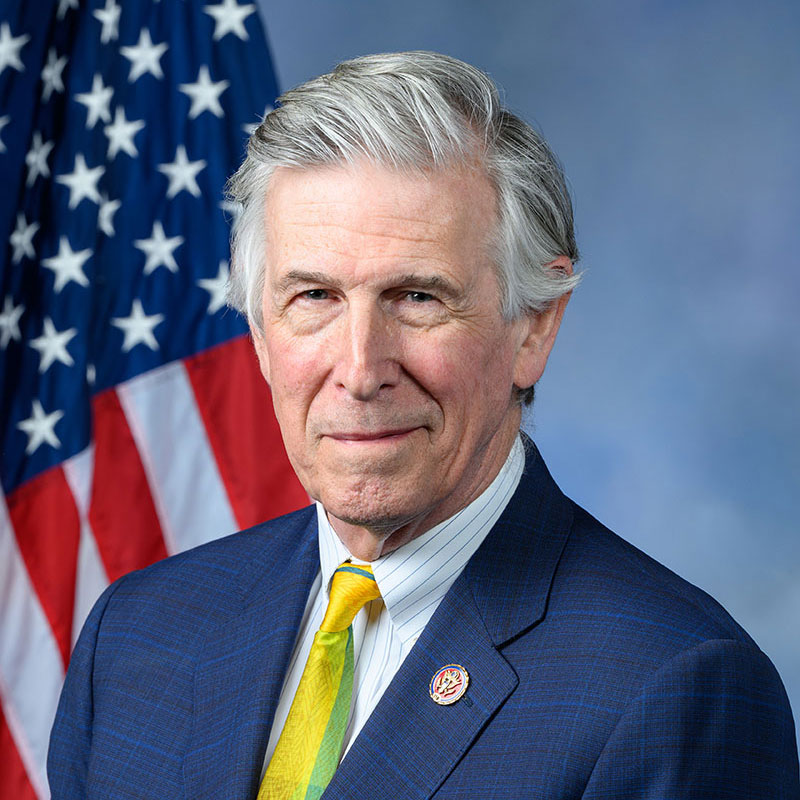
Normally Don Beyer doesn’t bring his multivariable calculus textbook to work, but his final exam was coming up that weekend. “And I’m running out of time,” he said, plopping the textbook and a scribbled notebook filled with esoteric-looking calculations on a coffee table in his office, “because I have all these—”
His phone was ringing. “I’ll be there,” Beyer told a colleague wondering when he would be returning to the House floor for votes. It seemed study time would have to wait. That’s been the story of the year for Beyer (D-Va.), who has been moonlighting as a student at George Mason University in pursuit of a master’s degree in machine learning while balancing his duties as a congressman. Beyer — a science wonk, economist and former car salesman — has been taking one class per semester in a slow but steady march toward the degree, with hopes of one day applying his artificial-intelligence knowledge to his legislative work as the technology evolves further. “They all must be thinking that, right?” Beyer’s deputy chief of staff, Aaron Fritschner, asked as Beyer told the story. So in a nutshell, what’s Beyer doing here? So they sent him the catalogue, made an exception for Beyer missing a deadline to sign up for classes, and voilà, he was back to college. To qualify to enter the master’s program, Beyer needed to complete seven undergraduate math and computer science courses; with three courses down this year and four to go, he expects to begin the actual graduate work by 2024. Rep. Jay Obernolte (R-Calif.), who next term will co-lead the AI caucus that Beyer also sits on, saluted the Virginia Democrat for working overtime on the degree. Having an AI master’s degree himself, and having gotten his doctorate in public administration while serving in the California legislature, he said, “I can tell you from personal experience that doing both at the same time is very difficult.” But as the power of artificial intelligence and its uses grow, Obernolte said it will be worth it to have another member at the table with all that fresh knowledge — particularly as the AI caucus seeks to steer Congress down responsible avenues for regulating the technology and use of personal data. “Some people who aren’t familiar with AI think that the biggest drawback of AI is evil robots with red laser eyes. You know what I mean?” Obernolte said. “You get closer to it and you realize that, no, there are actually drawbacks that are even more substantial than that, but they’re also more subtle. So we want to make sure that we approach the regulation of AI in a way that’s thoughtful, that does the protection of consumers and privacy that needs to be done, but also doesn’t stifle the innovation and entrepreneurialism that has characterized the last 50 years of the technology industry in America.” Beyer said that as he’s considered how he would want to use his AI background, he’s found himself zeroing in on one area that has already been a long-standing priority of his: suicide prevention. “I think more of the role of AI is to help set up the structure and framework for treating cases that do have a higher level of risk,” Horwitz said, “and being able to better provide the resources and follow up and support for those individuals who might need it.” In Beyer’s office, suicide prevention is personal, after a young staffer died by suicide. His death caught so many by surprise, Beyer said — his family, friends and colleagues wished there had been a sign. The technology, Beyer said, could provide the warning signs that clinicians may not immediately see. “There must be another thousand markers, many of which may be subtle,” Beyer said of factors that could be part of a risk profile. “But if you put them all together, you can use machine learning to say, ‘What do these 47,000 people,’ or over the course of 10 years, ‘What do these 500,000 people have in common’ that may give you the ability to interrupt that path” for someone else? Figuring out where Congress fits in, Beyer notes, is “absolutely the most practical net effect of just doing math problems late at night.” He’s not figured it all out just yet, he said, though thinking long-term, he hasn’t ruled out pursuing a doctorate in machine learning. “I’m not gonna live forever, but I thought, you know, looking at our 80-year-old president, I thought it won’t be a bad thing to have a PhD in machine learning, artificial intelligence at age 80. Still got 20 more years, maybe,” he said. For now, he’s focused on his next course in the spring: discrete mathematics. Goodbye, New York Times Sunday crosswords, he laments. |