
Articles
Could Federal Employees Soon Get Paid FMLA Leave? This Bipartisan Bill Would Make It Happen
Washington,
June 12, 2026
Tags:
Federal Employees
Originally posed on: FedSmith
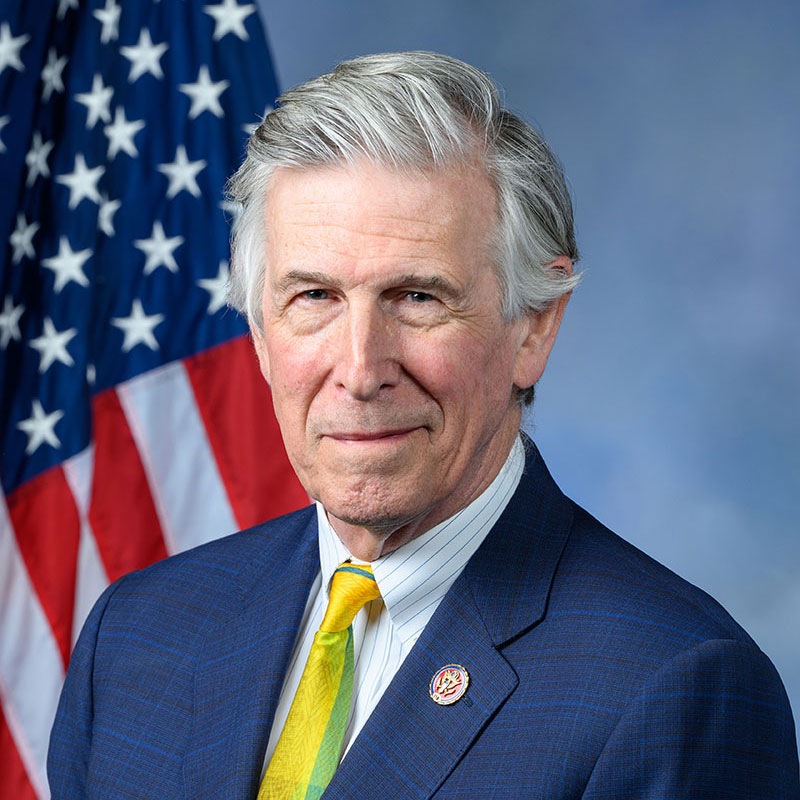
A bipartisan group of House members reintroduced legislation on June 11 that would extend paid leave benefits to federal employees for medical and family caregiving needs beyond the existing paid parental leave program. The Comprehensive Paid Leave for Federal Employees Act (H.R. 9261) was introduced by Congressman Don Beyer (D-VA) and has two co-sponsors as of the time of this writing: Brian Fitzpatrick (R-PA) and Chrissy Houlahan (D-PA). It has also been introduced in at least two prior sessions of Congress in 2021 and 2023. Under current law, federal employees receive paid parental leave for the birth or placement of a child, but leave taken for personal illness or to care for an ill family member remains unpaid, something this legislation seeks to change. What the Bill Would Do The legislation would guarantee 12 weeks of paid leave per year for federal employees in all situations currently covered by the Family and Medical Leave Act (FMLA). The FMLA already entitles eligible federal workers to 12 weeks of leave for qualifying family and medical needs, but that leave is unpaid in most circumstances beyond parental situations. Under the proposed legislation, the 12 weeks of paid leave would be available in the following circumstances:
The paid leave benefit would supplement — but not replace — the employee’s accrued annual or sick leave. Employees would not be required to exhaust those accrued leave balances before using the new benefit. To receive paid leave under the bill, an employee must first have completed at least 12 months of federal service. Congressional employees, Department of Veterans Affairs employees, Postal Service workers, and certain other categories of employees would be covered under separate provisions of the legislation. Work Obligation Requirement The legislation carries forward the work obligation requirement that applies to the existing paid parental leave program. Under that framework, employees who use paid leave must agree in writing, before using the leave, to return to their employing agency for a period of time equal to the length of leave taken. If an employee fails to fulfill the work obligation, the agency may recover the amount of government health insurance contributions paid on the employee’s behalf during the leave period. The work obligation requirement would be waived in cases where the employee is unable to return due to death or the onset, continuation, or recurrence of a serious health condition affecting the employee or an immediate family member. The Case for the Bill Supporters of the legislation argue that leaving medical and caregiving leave unpaid creates a significant practical gap in the federal employee benefits package. According to Representative Fitzpatrick: Unpaid leave may protect a job on paper, but for too many working families, it is not leave they can actually afford to take. When a federal employee faces a serious illness or needs to care for a loved one, the choice should not be between earning a paycheck and being present for their family. Without paid leave, workers can be pushed out of careers they have spent years building, agencies lose experienced public servants, and taxpayers lose operational expertise that cannot be easily replaced. Representative Beyer, whose Virginia congressional district includes one of the largest concentrations of federal employees in the country, cited workforce demographics as an additional reason for action. According to his press release, roughly 40% of the federal workforce is eligible to retire within the next three years, and just 6% of federal employees are under the age of 30. The sponsors also cited research indicating that providing paid family and medical leave to federal employees would save the government at least $50 million annually in employee turnover and replacement costs. Other Paid Leave Options Already Available to Federal Employees The Comprehensive Paid Leave for Federal Employees Act would add to an already substantial array of paid leave benefits available to federal workers. These are some of those leave options. Paid Parental Leave The most significant paid leave expansion for federal employees in recent years came in December 2019, when President Trump signed the Federal Employee Paid Leave Act into law as part of the National Defense Authorization Act for Fiscal Year 2020. The law gave federal employees up to 12 weeks of paid parental leave in connection with the birth, adoption, or foster care placement of a child. The benefit took effect on October 1, 2020, and applies to births or placements occurring on or after that date. To be eligible, employees must have completed at least 12 months of federal service, must work a non-intermittent schedule, and must agree in writing to return to work for their agency for 12 weeks following the conclusion of the leave. The leave is a separate category from accrued sick and annual leave and cannot be saved or carried over to a future birth or placement event. The National Defense Authorization Act for Fiscal Year 2021 later extended paid parental leave to Federal Aviation Administration employees, Department of Veterans Affairs employees, and other workers who were inadvertently excluded from the original legislation. A separate provision added in the FY2022 NDAA created a two-week paid parental bereavement leave benefit for the death of a child. Sick Leave Federal employees accrue sick leave at a rate of four hours per pay period, or 13 days per year for full-time workers. Unlike annual leave, sick leave has no accrual cap and can accumulate indefinitely throughout a federal career. That accumulated balance carries significant retirement value: upon separation, unused sick leave is converted into additional creditable service time used to calculate a federal employee’s annuity under the Federal Employees Retirement System (FERS) or the Civil Service Retirement System (CSRS). A federal employee with a substantial sick leave balance at retirement can add months — or even more than a year — to his or her creditable service calculation, meaningfully increasing the pension payout. How sick leave and annual leave are each handled at retirement is a subject many federal employees find worth understanding well in advance of separating from service. Sick leave may be used for the employee’s own illness or medical appointments and also to care for a family member who is ill. Under current rules, however, sick leave covers only a limited range of caregiving situations and is not structured as a long-term medical and family leave benefit. Annual Leave Annual leave is a general-purpose paid leave category that federal employees can use for any purpose, including illness. Full-time employees accrue annual leave at rates that increase with their length of service: 4 hours per pay period for those with fewer than 3 years of service, 6 hours per pay period for those with 3 to 15 years of service, and 8 hours per pay period — or 26 days per year — for those with 15 or more years of service. Most federal employees may carry over up to 30 days (240 hours) of unused annual leave into the following year, creating a substantial built-up balance for long-serving employees. Employees in the Senior Executive Service (SES) and in senior-level or scientific and professional positions may carry over up to 90 days. Unlike sick leave, unused annual leave is paid out as a lump sum when an employee separates from federal service — at the employee’s pay rate at the time of separation — making it a significant financial asset for those who have built up a large balance. Family and Medical Leave Act (Unpaid) Federal employees covered by the FMLA are entitled to up to 12 weeks of unpaid leave per year for the same qualifying family and medical circumstances the new bill proposes to make paid. This is the gap the current legislation targets: the entitlement already exists in statute, but it is unpaid for reasons beyond parental care. Employees may choose to substitute accrued annual or sick leave during an FMLA period, but the new bill would eliminate the need to deplete those accrued balances — and their corresponding retirement value — to cover medical and family crises. Legislative Outlook The bill faces a challenging political environment in the Republican-controlled 119th Congress. Prior versions did not advance past committee. When the 117th Congress version was taken up by the House Oversight and Reform Committee in 2021, it passed along party lines after a contentious markup. Congressman James Comer (R-KY), for instance, argued that federal employees already have generous paid time off. In his remarks, he said, “Rather than ensuring federal agencies are meeting their missions, especially in the wake of COVID-related shutdowns, we are considering expanding another benefit for the already well-paid and well-protected federal workforce.” He also added, “Federal employees would be eligible for this type of leave every year, on top of their ordinary annual leave. So, combined with federal holidays, under this legislation, a federal employee might work only eight months out of the year—even less in some cases.” The current version was introduced with bipartisan sponsorship, a potential indicator of broader appeal, but because it has failed to advance in the past, that does not bode well for its prospects in the current session of Congress.
|