Press Releases
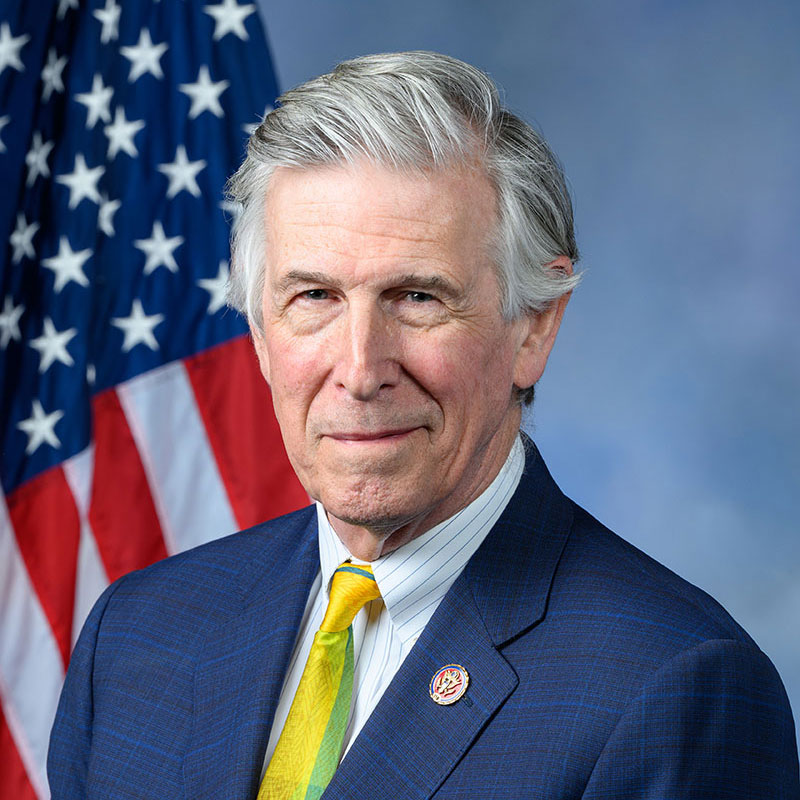
Democratic Ways And Means Committee Members Seek Clarity From IRS On “Bags Of Cash” Tax Treatment Under Republican Tax LawU.S. Representatives Don Beyer (D-VA), Lloyd Doggett (D-TX), Linda Sanchez (D-CA), Judy Chu (D-CA), and Brad Schneider (D-IL), all of whom serve on the House Committee on Ways and Means, yesterday wrote to the Internal Revenue Service (IRS) requesting clarity on IRS guidance for the “no tax on tips” provision of H.R. 1, the “One Big Beautiful Bill Act,” tax legislation enacted last year by Republicans in Congress and President Trump. Their letter was submitted as an official comment on the rulemaking proposed by IRS and the Treasury Department for the federal register. The Members inquired about how the provision would apply “when a government official has previously received cash payments in anticipation of future favors (e.g., government contracts).” They wrote: “This letter seeks clarification regarding the application of selected proposed rules that would define qualified tips… … “There is an open question regarding the application of the tips deduction when a government official has previously received cash payments in anticipation of future favors (e.g., government contracts). The first question is whether such payments are customarily tips. … “This comment requests an example as follows: A political operative is a clear front runner for a high-level political job within the next six months. He is given $50,000 in cash in a bag in a parking lot, after a lunch discussing hopes that the payor will receive government contracts if the operative is put in a place of power. There is no guarantee of any service or result. Under these circumstances, the payment [is/is not] illegal and [is/is not] a qualified tip. [Describe treatment under OBBBA tips provision.] “In crafting this example, and in the interest of additional clarity, the final regulations should further explain whether and when a payment like this is illegal.” A signed copy of the letter is available here, and full text follows below. ***
Re: Comment on Proposed Regulations Identifying Occupations That Customarily and Regularly Received Tips; Definition of Qualified Tips (RIN 1545-BR63) This letter seeks clarification regarding the application of selected proposed rules that would define qualified tips, as published in the Federal Register on September 22, 2025. Clarifying the application of the final regulations would be in the interest of ensuring clarity to taxpayers and ensuring that the law is implemented as written by Congress. Background On July 4, 2025, President Trump signed Public Law 119-21, 139 Stat. 72 (July 4, 2025), commonly known as the One, Big, Beautiful Bill Act (OBBBA). Section 70201 of OBBBA is titled “No Tax on Tips” and would add a new section 224 to the Internal Revenue Code. The provision does not actually exclude tips from being taxed. Instead, the general structure of the provision is a deduction against income taxes for tips received “by an individual in an occupation which customarily and regularly received tips on or before December 31, 2024.” The provision is limited by adjusted gross income, with phaseouts above the limit. The deduction cannot exceed $25,000. Under this structure, all tips will remain taxable under payroll tax rules. For purposes of this comment, the most important statutory provision is the definition of “Qualified Tips” provided in new Code section 224(d): (d) Qualified tips.--For purposes of this section-- (1) In general.--The term “qualified tips” means cash tips received by an individual in an occupation which customarily and regularly received tips on or before December 31, 2024, as provided by the Secretary. (2) Exclusions.--Such term shall not include any amount received by an individual unless-- (A) such amount is paid voluntarily without any consequence in the event of nonpayment, is not the subject of negotiation, and is determined by the payor, (B) the trade or business in the course of which the individual receives such amount is not a specified service trade or business (as defined in section 199A(d)(2)), and (C) such other requirements as may be established by the Secretary in regulations or other guidance are satisfied. For purposes of subparagraph (B), in the case of an individual receiving tips in the trade or business of performing services as an employee, such individual shall be treated as receiving tips in the course of a trade or business which is a specified service trade or business if the trade or business of the employer is a specified service trade or business. (3) Cash tips.--For purposes of paragraph (1), the term “cash tips” includes tips received from customers that are paid in cash or charged and, in the case of an employee, tips received under any tip-sharing arrangement. Fact Pattern – Bags of Cash for in Anticipation of Government Contracts There is an open question regarding the application of the tips deduction when a government official has previously received cash payments in anticipation of future favors (e.g., government contracts). The first question is whether such payments are customarily tips. The proposed regulations adopts definitions that “are consistent with IRS guidance defining tips for FICA and income tax withholding purposes in . . . Rev. Rul. 2012-18.” Rev. Rul, 2012-18 lays out factors to distinguish wages from tips. The following factors lean in favor of categorization as tips: (1) The payment must be made free from compulsion; (2) The customer must have the unrestricted right to determine the amount; (3) The payment should not be the subject of negotiation or dictated by employer policy; and, (4) Generally, the customer has the right to determine who receives the payment Consider these factors in the case of a man who is broadly expected to become a high-ranking political official. This man is given a bag full of cash by a businessman who hopes to win future government contracts. In this case, each of the factors laid out in Rev. Rul. 2012-18 is present. But the inquiry does not stop there. The proposed regulations would exclude from qualified tips, “[a]ny amount received for a service the performance of which is a felony or -misdemeanor under applicable law is not a qualified tip.” The statute makes no mention of distinguishing legal from illegal activity, and the final regulations should explain the authority for this distinction. Congress made no indication that payments for illegal activities should be excluded from the tips rule. This comment requests an example as follows: A political operative is a clear front runner for a high-level political job within the next six months. He is given $50,000 in cash in a bag in a parking lot, after a lunch discussing hopes that the payor will receive government contracts if the operative is put in a place of power. There is no guarantee of any service or result. Under these circumstances, the payment [is/is not] illegal and [is/is not] a qualified tip. [Describe treatment under OBBBA tips provision.] In crafting this example, and in the interest of additional clarity, the final regulations should further explain whether and when a payment like this is illegal. We hope this comment is helpful, and we look forward to studying the final rules. |