
Articles
D.C. retirement board grants full pension to widow of officer who took his own life after Capitol riot
Washington,
March 11, 2022
Originally published on Washington Post
A D.C. retirement board has granted a full pension to the widow of a District police officer who was injured confronting rioters at the Capitol insurrection and later took his own life. As a result of the decision, Erin Smith will receive a yearly annuity equal to 100 percent of the officer’s salary, typically given only to families of officers whose deaths are ruled as occurring in the line of duty. In Smith’s case, the D.C. Police and Firefighters Retirement and Relief Board said in a letter dated March 7 that the officer’s injury on Jan. 6, 2021, “was the sole and direct cause of his death.” It also refers to a city code that describes line-of-duty deaths by officers. Erin Smith’s attorney, David P. Weber, said he believes such a ruling is rare in the context of a suicide, and he will now use this declaration to ask for a memorial service to be held by D.C. police and at the Capitol Rotunda.
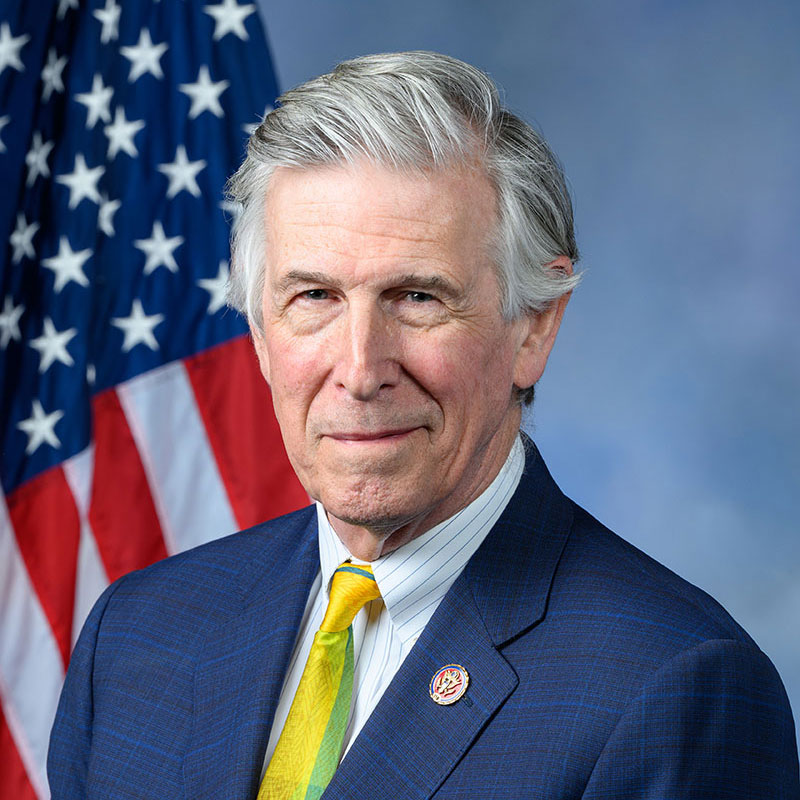
U.S. Capitol Police officer Brian D. Sicknick lay in honor at the Rotunda after he died following the Jan. 6 riot. His death was determined to be from natural causes. Two men were arrested and charged with assaulting him. President Biden attended Sicknick’s memorial. Rep. Don Beyer (D-Va.), who represents Smith’s family in Congress, said in a statement Wednesday night that he supports “full memorial honors for Officer Smith.” “Officer Jeffrey Smith would still be alive today if he hadn’t risked his life to defend all of us at the U.S. Capitol and our democracy itself on January 6th,” Beyer said. “His heroism led to his death, which absolutely occurred in the line of duty, and the official acknowledgment of that fact is an important moment that I hope will bring a measure of solace to his family and friends.” Beyer said Wednesday night that he was particularly thinking of Erin Smith, who fought for more than a year for her husband’s death to receive the same recognition and honors as other police officers who have died in the line of duty. Sen. Tim Kaine (D-Va.) said he was “so relieved that following our push for it, Virginian Officer Jeffrey Smith will receive the official officer’s line-of-duty death designation, entitling his wife to full benefits. We will forever be grateful for his service to protect our Capitol.” Sen. Tammy Duckworth (D), who represents Smith’s parents in Illinois, said she, too, was “relieved the Smith family’s long saga” in seeking recognition is achieving results. But she added that “no family should ever be forced to go through what they had to endure.” Weber said Erin Smith also wants her husband’s name added to the D.C. police department’s list of fallen officers and engraved on the National Law Enforcement Officers Memorial. The memorial is run by a nonprofit group whose executive director has said inclusion is not typically considered in suicide cases. On Thursday, Weber wrote D.C. Police Chief Robert J. Contee III to “request an official burial and honors” for Smith. “Please advise on the next steps,” he wrote, adding that the family is seeking permission for Smith to be interred at Arlington National Cemetery, next to where Sicknick is buried. Dustin Sternbeck, a D.C. police spokesman, said a line-of-duty designation for Smith “is still under review” and that any decision would be conveyed directly to the family. Contee and two police department lawyers told the retirement board earlier in the process that there is “no direct evidence of Officer Smith’s mind-set at the time of his death.” They wrote they could not “reasonably opine” whether Smith’s death was linked to physical or psychological injuries from Jan. 6, and to do so “would be pure speculation.” Those doctors concluded that Smith lost consciousness during the riot and later exhibited “mood and behavioral changes” that led to his suicide. Smith had gone to the police and fire medical clinic hours after the riot, but his lawyer says his injuries were misdiagnosed. The clinic cleared him to return to work on Jan. 14. Smith shot himself the following day while driving into the District for his first shift. The family of another officer who took his own life after encountering rioters, Capitol Police officer Howard Liebengood, also is pressing for recognition. In a statement issued Thursday, Liebengood’s family said they too believe the Capitol police officer’s death “was the result of his official duties during Jan. 6th and in the ensuing days." It added, “As such, his death should also be considered ‘in the line of duty.’” Unlike Smith, Liebengood is a federal employee. His family said they have filed a claim with the Justice Department’s Public Safety Officers’ Benefits program and it remains under review. Two other D.C. police officers who were at the Capitol on Jan. 6 also took their own lives in the months afterward; their families have not spoken publicly. |